
Choosing the Right Signature Folder Gluer for Your Operation
 You’ve decided a Signature Folder Gluer is the right machine for your operation, but which model best fits your production requirements?
All Signature Folder Gluers are built with the same focus on solid construction, long-term reliability, and operator-friendly design. Each machine is configured to the customer’s requirements, so you aren’t paying for features you don’t need. And regardless of the model, Signature owners receive the same level of service and support they have come to know and trust.
But there is no “one size fits all” folder gluer. The right model depends on the applications you run, the materials you work with, the range of carton sizes and styles you produce, and where your operation may be headed next.
This article will help you narrow down the Signature models that best fit your needs and determine which ones are worth investigating further.
What Should You Consider When Choosing a Signature Folder Gluer?
Choosing the right folder gluer starts with understanding the work you need it to handle. Before comparing individual machine models, consider the range of cartons you currently produce as well as the types of work you may want to take on in the future.
Some of the key factors to consider include:
- Carton size: What are the smallest and largest cartons you regularly run? Do you plan to run both sizes on the same machine?
- Material: Are you running folding carton, corrugated, or a combination of both? What flute types and GSM ranges do you need to accommodate?
- Carton styles: Do you primarily run straight-line cartons, or do you need the flexibility to handle crash-lock, 4&6 corner, or specialty applications?
- Production requirements: What volume of cartons is typical for your jobs? Do you have specific inspection or regulatory requirements? How frequently will you need to change over the machine for different product runs?
- Facility requirements: How much room is available for the folder gluer and any additional equipment? Can the space support the necessary electrical, compressed air, or other needs?
- Future needs: Could new customers, products, or applications change what you need from your equipment in the next several years?
These factors can quickly narrow down which Signature models are best suited to your operation. For a more detailed look at evaluating your requirements, read Evaluate Your Folder Gluer Needs Before You Buy.
With those needs in mind, the following chart provides an overview of the Signature folder gluer lineup and where each model fits.
| Your Production Needs | Compact | Access | Premier | Elite | Eagle | Albatross |
|---|---|---|---|---|---|---|
| Limited Floor Space | ✓ | |||||
| Shorter Production Runs | ✓ | |||||
| 4&6 Corner Style Cartons | ✓ | ✓ | ✓ | ✓ | ✓ | |
| Fast Fold Capability | ✓ | ✓ | ||||
| Paperboard & Corrugated Materials | ✓ | |||||
| Large-Format Corrugated | ✓ | |||||
| High-Speed Production | ✓ | ✓ | ✓ |
How the Signature Models Differ
While there is some overlap in capabilities across the Signature lineup, each model is designed with different applications and production needs in mind. Looking at the machines in three groups can help clarify where to begin.
Compact and Access — Smaller Footprint and Economical Versatility
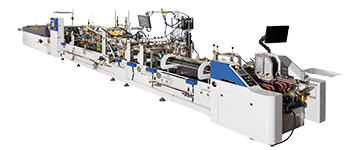
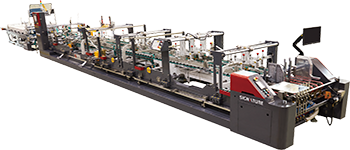
The Compact and Access are both designed for folding carton applications but serve different needs within that market.
The Signature Compact is designed specifically for small-format straight-line and lock-bottom cartons and short-run production where a full-size folder gluer may not be necessary. Its smaller footprint also makes it well suited for operations where floor space is limited. The Compact is available in sizes 70, 90, and 110.
The Signature Access provides an economical option for operations that need greater versatility across carton sizes and styles. The Access can accommodate a broader range of folding carton applications including 4&6 corner cartons. The Access is available in sizes 90 and 110.
For operations considering these two models, the decision often starts with the size and variety of cartons being produced, available floor space, and the range of applications the machine will need to accommodate.
Premier and Elite — Greater Folding Carton Capability
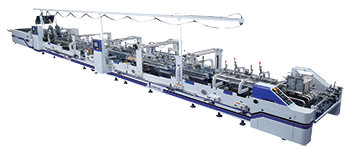
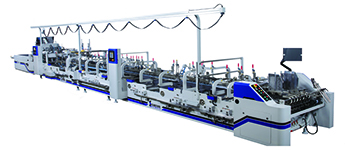
The Premier and Elite are the most versatile folder gluers within the Signature lineup. These high-performance machines are similar in capabilities with a few distinctions.
The Signature Premier is designed for operations that need flexibility to handle a wide variety of carton styles and sizes. Its range of configurations allows it to be tailored around the jobs an operation runs today while providing flexibility for changing production needs in the future. The Premier is available in sizes 70, 90, 110, and 135.
The Signature Elite builds on that versatility for more demanding production environments, with a focus on maximum output, accuracy, and setup efficiency. The Elite provides longer sections for higher-volume production runs. The Elite is available in sizes 90, 110, and 135.
Because the capabilities of the Premier and Elite can overlap, choosing between them often requires looking beyond carton style and size alone. Production demands, changeover requirements, application complexity, and the specific machine configuration can all influence which model is the better fit.
Eagle and Albatross — Moving Into Corrugated
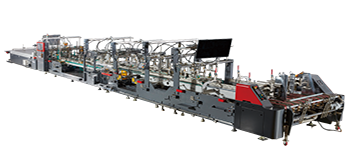
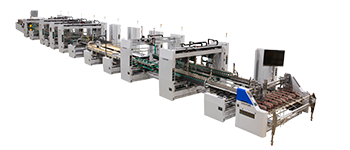
For operations producing corrugated packaging, material type and carton size become major factors in narrowing the selection. Larger and heavier blanks call for sturdy machines that can handle this level of production for years to come.
The Signature Eagle offers the flexibility to process both paperboard and corrugated materials, making it a strong option for operations with a mixed product portfolio or those looking to expand beyond traditional folding carton applications. The Eagle has the ability to run paperboard from 200-800 GSM as well as corrugated blanks up to E/B flute on its 135 size and up to A flute on its 145 and 165 sizes.
The Signature Albatross is designed specifically for large-format corrugated and heavy solid board applications. Its size and configuration are intended for operations producing larger corrugated cartons that extend beyond the typical capabilities of folding carton equipment. The Albatross is available in sizes 220 and 300 with the ability to be customized to other widths as required by the customer.
For operations considering the Eagle or Albatross, the decision comes down largely to material, carton dimensions, and whether the machine needs to accommodate folding carton applications in addition to corrugated work.
The Right Model Is Only Part of the Decision
Choosing the right Signature model is an important first step, but the machine itself is only part of the overall solution. Once a model has been identified, the specific configuration can be tailored around the applications you plan to run.
Machine size, folding sections, specialty attachments and other options can all be selected based on your carton styles, materials and production requirements. Additional equipment, such as the SIG-FEED prefeeder, SIG-CHECK inspection system or SIG-PACK carton packer, can also be integrated when the folder gluer is built, or in the future as production needs increase.
This is why evaluating your actual applications is so important. Two operations considering the same Signature model may ultimately need very different configurations based on what they produce and how the folder gluer fits into their overall process.
The Signature team can review your carton samples, specifications and production requirements to help determine the Signature model and configuration that best fits your operation.