
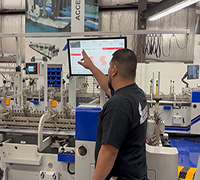
Beyond the Service Call: Giving Operators the Knowledge to Troubleshoot
 Some of the best proof of good service doesn’t come from the company itself. It comes from a customer who takes the time to write in and say thank you.
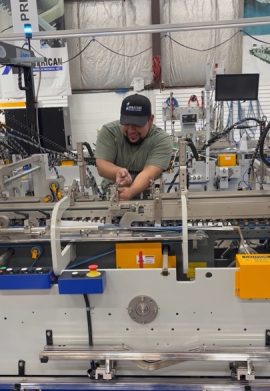
That’s what happened after AIM’s training specialist, Jimmy, spent a week at Smurfit Westrock’s Dallas facility, working hands-on with an operator on a Signature Folder Gluer and a Sig-Pack packer. The goal wasn’t just to get equipment running. It was to build an operator’s confidence and skill to the point where they could handle most matters themselves.
The two started with a straight-line job specifically because that is the type of work most commonly run on this machine. It gave the operator real practice diagnosing issues as they came up, the kind of hands-on troubleshooting that builds lasting skills.
That approach paid off quickly. By the end of the first day, the folder gluer was running at roughly 50,000 units per hour. From there, they worked together to bring the machine back to OEM specifications, giving the operator a close look at what that process involves.
Making Time for the Sig-Pack
There was also a Sig-Pack at the facility that had been acquired from another plant approximately two years earlier. Previous attempts to get it running had been unsuccessful.
Getting it operational could have been another service call for another day. But Jimmy was already there, so he took another look at it. This time, they were successful. This gave the operator another opportunity to expand their skillset by learning how to operate the Sig-Pack and properly perform changeovers.
“I have to say, people started gathering around when they saw our Sig-Pack running for the first time in 2 years!" stated the customer.
The Measure of Success
The real measure of the training, however, came after Jimmy left. The operator’s manager began noticing the difference. “He helped one of my up and coming operators to become more confident," the customer told us. “Our operator shows more initiative and brings me solutions."
That’s a pretty good measure of successful training.
Good service isn’t just about getting equipment running in the moment. It’s about leaving an operator more capable than before, with the skills to troubleshoot real production issues on their own. In this case, that meant one operator walking away with a notebook full of notes, hands-on experience diagnosing actual equipment problems, and enough confidence to apply that knowledge across other machines on the floor.
That’s the kind of outcome that’s worth sharing.