
How to Evaluate Your Folder Gluer Needs Before You Buy
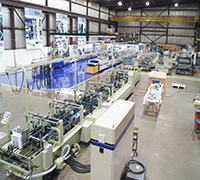 Investing in a folder gluer is more than comparing machine speeds or selecting a model that fits within budget. The right solution depends on the products you run, the demands of your operation, and where your business plans to grow in the future.
Many companies begin searching for a folder gluer after encountering production challenges such as increasing setup times, inconsistent quality, or limitations with current equipment. But before evaluating machine specifications, it is important to first evaluate your operation itself.
A successful folder gluer investment starts with understanding:
- the types of cartons currently being produced,
- the range of carton sizes and substrates,
- production goals,
- operator requirements,
- available floor space and facility limitations,
- and potential future applications.
Taking the time to assess these factors early can help prevent costly limitations later and ensure the machine is properly matched to the operation.
Start With a Full Carton Audit
Before comparing folder gluer models, begin by evaluating the cartons your operation currently produces. This step often reveals important production requirements that directly impact machine configuration, performance, and future flexibility.
Start by documenting the full range of carton sizes being run throughout the facility, including both the smallest and largest formats. Next, determine what specialty jobs, seasonal work, or future expansion plans may require additional flexibility that should be considered early in the process.
It is also important to review the different carton styles currently being produced, such as:
- straight-line cartons,
- auto-bottom or crash-lock cartons,
- 4-corner and 6-corner cartons,
- sleeves,
- specialty promotional packaging,
- and large-format corrugated applications.
Beyond carton style, substrate characteristics can significantly affect folder gluer performance. Paperboard grades, corrugated materials, coatings, and specialty finishes may all influence feeding consistency, folding behavior, glue performance, and achievable production speeds.
For example, operations producing cartons with:
- UV coatings,
- aqueous coatings,
- heavy ink coverage,
- pharmaceutical applications,
- Braille embossing,
- or specialty finishes
may require specific considerations when selecting a folder gluer configuration.
This audit process not only helps determine machine requirements for current production, but also identifies opportunities to support future growth, expand capabilities, and discover new packaging applications without quickly outgrowing the equipment investment. It can also help identify unnecessary options or features that may increase overall equipment costs without providing value to production.
Evaluate Current Production Challenges
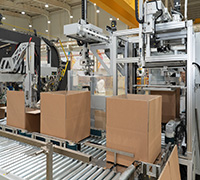 Once the carton audit is complete, the next step is evaluating the day-to-day production challenges within the operation. In many cases, the need for a new folder gluer becomes apparent long before a machine reaches the end of its usable life. Production inefficiencies, staffing requirements, and capacity limitations often become the driving factors behind equipment upgrades or the addition of supplemental machines.
Start by identifying where production issues occur most frequently. For some operations, setup and changeover times may be slowing overall production. Others may struggle with inconsistent glue application, carton alignment issues, or difficulty maintaining quality at higher production speeds.
It is also important to evaluate how dependent the operation is on experienced operators. Machines that require constant adjustments or extensive operator intervention can create challenges when training new employees or managing operator availability. As workforce demands continue to evolve, many companies are prioritizing equipment that offers easier setup, repeatability, and more consistent performance across operators.
Additional production considerations may include:
- excessive downtime between jobs,
- increasing material waste or rework,
- limitations when running complex carton styles,
- bottlenecks at the delivery or packing section,
- inconsistent production speeds,
- or difficulty keeping pace with customer turnaround expectations.
In some cases, the folder gluer itself may not be the only limitation. Material handling processes such as manual packing, load turning, or material flow throughout the plant can also affect overall line efficiency.
Customer quality expectations should also be considered when evaluating current production challenges. In industries where packaging accuracy is critical, even minor carton defects can result in rejected product, customer complaints, or costly rework. As production speeds increase, maintaining consistent quality inspection through manual processes alone becomes more difficult. This leads to many operations evaluating print inspection and carton defect detection systems capable of identifying and removing defective cartons during production.
These systems can help detect issues such as:
- print defects,
- missing or incorrect information,
- glue defects,
- barcode verification failures,
- carton alignment issues,
- or other inconsistencies that may affect product quality or compliance requirements.
This level of inspection is especially important in industries such as pharmaceutical packaging, where customer and regulatory expectations often allow little tolerance for packaging errors.
Understanding these operational challenges early in the evaluation process helps determine not only what type of folder gluer is needed, but also which features, automation options, or workflow improvements may provide the greatest long-term value for the operation.
Think Beyond Today’s Production Needs
While current production requirements are an important starting point, selecting a folder gluer based only on today’s workload can quickly create limitations as customer demands and packaging trends evolve. A machine investment should not only support current production goals, but also provide flexibility for future growth and changing applications.
Many companies begin their equipment search with a specific project or immediate production challenge in mind. However, over time, operations often expand into new carton styles, larger formats, shorter turnaround times, or more complex packaging requirements. What works well for current production today may become restrictive as business needs change.
When evaluating future production goals, consider questions such as:
- Will carton sizes or styles expand in the future?
- Is there potential to move into corrugated or micro-flute applications?
- Are customers requesting more complex carton designs or specialty finishes?
- Could production volumes increase significantly over the next several years?
- Will faster setup times or greater automation become necessary?
- Will staffing efficiency continue to be an important consideration?
Planning for future flexibility can help prevent the need for premature equipment replacement or expensive modifications later. In many cases, selecting the right machine platform early allows operations to expand capabilities over time through upgraded configurations or production enhancements.
It is also important to evaluate how the folder gluer may fit into future production lines as automation becomes more common throughout packaging facilities. Features such as prefeeding, inline print inspection, carton defect detection, and automated packing systems may become increasingly valuable as companies work to improve production efficiency, reduce labor dependency, and maintain consistent quality standards.
In some cases, companies purchase equipment based on theoretical future applications rather than realistic production goals. While additional automation, specialty features, or maximum production capabilities may appear beneficial during the buying process, unnecessary options can increase equipment costs, setup complexity, maintenance requirements, and operator training demands without providing meaningful operational value.
The goal is not simply to purchase the largest or most advanced machine available, but to identify a solution that balances current production requirements with realistic future growth opportunities.
For many operations, this means evaluating:
- which features are essential today,
- which capabilities may realistically support future expansion,
- and which options may add unnecessary cost or complexity to the process.
Companies may also benefit from evaluating ancillary equipment and automation options that can be integrated later as production demands evolve. Features such as roll-up print inspection systems, prefeeders, load turning, and automatic packing equipment may not be necessary during the initial machine purchase, but the ability to add these solutions later can help support future growth without requiring complete equipment replacement.
Taking this approach allows operations to scale strategically over time while maintaining greater control over capital investment and workflow complexity.
Consider Operator Experience and Staffing
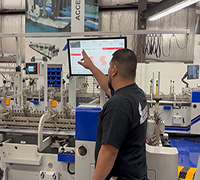 When evaluating a folder gluer investment, machine specifications and production speeds are only part of the equation. The people responsible for operating the equipment play a significant role in overall production efficiency, consistency, and long-term success.
Many packaging operations continue to face challenges related to staffing such as workforce turnover and difficulty of finding highly experienced machine operators. As a result, ease of operation, setup simplicity, and repeatability have become increasingly important factors during the equipment evaluation process.
While experienced operators remain invaluable, equipment that relies too heavily on manual adjustments or operator intuition can create long-term operational risks as staffing needs evolve.
When evaluating folder gluer options, consider questions such as:
- How complex are machine setups and changeovers?
- How much operator intervention is required during production?
- Can newer operators be trained efficiently?
- How repeatable are job setups between shifts or operators?
- Does the machine provide consistent performance across varying skill levels?
- Will staffing requirements increase as production demands grow?
- What type of operator training program does the manufacturer or distributor provide?
- How are technical support inquiries and service requests handled?
- Is ongoing support available as staffing or production needs evolve?
Features such as automated adjustments, computerized job storage, streamlined setup access, and intuitive machine controls can help reduce setup times while improving production consistency between operators.
It is also important to consider how ancillary automation may support staffing efficiency throughout the production process. Prefeeders, load turning, print inspection systems, and automatic packing equipment can help reduce manual labor requirements while allowing operators to focus more attention on machine performance and quality control rather than repetitive material handling tasks.
Training and long-term support can have a significant impact on overall equipment success. Even highly advanced equipment may struggle to deliver consistent performance if operators are not properly trained or if technical support is difficult to access when production issues arise.
Evaluating the manufacturer’s approach to training, troubleshooting, service responsiveness, and ongoing customer support can help operations better prepare for long-term production success while reducing downtime and operator frustration.
Ultimately, the goal is not to replace operator expertise, but to provide equipment and solutions that help operators work more efficiently, consistently, and confidently within the demands of modern packaging production.
Evaluate Available Floor Space and Facility Layout
Available floor space is sometimes overlooked as an important consideration when evaluating a new folder gluer. While machine specifications and production capabilities are important, the equipment must also integrate efficiently within the existing production environment.
Before selecting a machine, it is important to evaluate not only the footprint of the folder gluer itself, but also how material moves throughout the surrounding production area. Factors such as feeder access, carton staging, packing areas, operator movement, and finished product flow can all affect long-term production efficiency.
Floor space may create challenges when adding larger equipment or future automation, but considering the machine footprint alone should not be the only determining factor. Restricted access around the machine can impact operator safety, maintenance accessibility, setup efficiency, and material handling throughout production.
When evaluating floor space and workflow requirements, consider questions such as:
- Is there adequate space for material staging and finished product handling?
- Can operators safely and efficiently access all areas of the machine?
- Will future automation require additional floor space?
- How will cartons move into and away from the folder gluer?
- Are there existing challenges at the packing or delivery section?
- Will workflow improve or become more congested with the new equipment?
- Is there room for future ancillary equipment such as prefeeders, print inspection systems, or automatic packing equipment?
- Can the existing facility infrastructure support the machine’s electrical and compressed air requirements, if needed?
As operations continue to pursue greater efficiency and automation, many companies are evaluating equipment layouts with long-term production optimization in mind. Planning for future material flow, operator accessibility, and potential automation integration early in the process can help improve overall production efficiency while reducing costly layout changes later.
A well-planned equipment layout should support not only machine performance, but also the people, processes, and environment surrounding the production line.
Understand That Speed Depends on the Entire Application
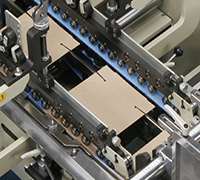 Production speed is often one of the first specifications companies compare when evaluating a folder gluer. However, real-world production performance depends on far more than the machine’s maximum rated speed alone.
In actual production environments, achievable speeds are influenced by a combination of factors related to the carton design, substrate characteristics, environmental conditions, and overall application requirements. As a result, two cartons running on the same machine may perform very differently depending on the specific production conditions and operator experience.
Factors that may influence production speed include:
- carton style and complexity,
- substrate type and thickness,
- coatings and specialty finishes,
- glue application requirements,
- carton dimensions,
- warp or material consistency,
- operator setup experience,
- and packing or material flow limitations.
For example, certain coated substrates may feed and transport differently than uncoated materials, while complex carton designs such as 4-corner or 6-corner cartons may require slower production speeds to maintain folding accuracy and consistent quality.
When evaluating folder gluer performance, operations should consider how the machine will perform with their specific applications rather than relying solely on published speed specifications. Understanding the full production environment can help create more realistic expectations while maintaining consistent quality, minimizing waste, reducing downtime, and achieving consistent production results.
Additional considerations surrounding substrate behavior, carton complexity, coatings, and workflow impact on production speed will be explored further in a separate article dedicated to real-world folder gluer performance factors.
Plan Beyond the Initial Purchase
A folder gluer investment is often expected to support production for many years, making long-term planning an important part of the evaluation process. While current production requirements should guide the initial machine selection, operations should also consider how the equipment may adapt as customer demands, packaging trends, and business objectives evolve.
At the same time, flexibility should be approached strategically. The goal is not necessarily to purchase every available option or the most complex configuration possible, but rather to invest in a machine platform capable of adapting alongside realistic operational growth.
When evaluating flexibility, consider questions such as:
- Can the machine support future carton styles or applications?
- Is the platform capable of handling expanded size ranges or substrates?
- Can additional equipment or automation solutions be integrated later?
- Will the machine continue to support evolving production demands over time?
- Can the equipment adapt without requiring complete replacement?
In many operations, scalable configurations provide the most practical balance between current production needs and long-term operational flexibility. In addition to ancillary equipment such as prefeeders, print inspection systems, or automatic packing systems, companies should also evaluate whether the folder gluer itself can be upgraded with additional machine options as production needs evolve.
Depending on the machine platform, available upgrades may include:
- carton aligners,
- additional attachment sections,
- specialized folding devices,
- or other application-specific enhancements.
The ability to expand machine capabilities over time can help operations adapt to new carton styles, increased production demands, and changing customer requirements without requiring complete equipment replacement.
Making an Informed Investment
Taking the time to thoroughly evaluate current carton requirements, production challenges, staffing considerations, facility limitations, future growth plans, and long-term equipment value, companies can make more informed investment decisions and avoid costly surprises later.
Once you have a clear understanding of your applications and production requirements, the next step is determining which equipment can meet those needs. Compare the Signature Folder Gluer lineup to see which models may be the best fit for your operation.
While familiarity with a particular equipment manufacturer can offer advantages in training, maintenance, and operator experience, it is important to evaluate whether the machine configuration and capabilities align with current and future production requirements. The best equipment choice is often the one that best supports the application, operational goals, and long-term growth plans rather than simply matching existing equipment on the plant floor.
If you have questions about carton applications, production requirements, automation opportunities, or equipment configurations, the team at Signature Folder Gluers is available to discuss your operation and help identify potential solutions.